
Thi thử tốt nghiệp THPT•Miền Bắc•••Đề Sở GD&ĐT••
Đề mở công khai

Kỳ Thi Thử Tốt Nghiệp THPT Tiếng Anh 2026 - Đề Số 0202

Kỳ Thi Thử Tốt Nghiệp THPT Tiếng Anh 2026 với 35 câu hỏi, bao gồm ngữ pháp, từ vựng và đọc hiểu. Có đáp án và lời giải chi tiết trên Đề Thi Chuẩn.

50 phút
•
40 câu hỏi
•
Thang điểm 10
•
1 lượt xem
•
0 lượt thi
•
Chấm điểm tự động
Tải đề thi (PDF)
Miễn phí 100% • Không cần tài khoản

Xem trước & làm thử đề thi (40 câu)

Chọn đáp án rồi bấm Kiểm tra để biết đúng hay chưa. Đáp án và lời giải mở khi bạn muốn xem.

Tải đề PDF
Read the following passage and mark the letter A, B, C or D on your answer sheet to indicate the best answer to each of the following questions from 1 to 10.
After more than fifteen years of negotiations and public campaigning, the Global Ocean Treaty entered into force in early 2026. For the first time, areas of the ocean beyond national jurisdiction are subject to an international framework intended to facilitate large-scale marine conservation. Environmental organisations view the agreement as a decisive shift, addressing decades of fragmented governance and limited oversight in the High Seas, where economic interests have often taken priority over ecological concerns.
Less than one percent of these waters is currently fully or highly protected. This regulatory gap has enabled industrial fishing and potential deep-sea mining activities to proceed with relatively few constraints. [I] The Treaty introduces a procedure allowing governments to designate marine protected areas in international waters. If applied ambitiously, such measures could safeguard over one-third of the global ocean, forming an unprecedented network of protected ecosystems.
The agreement’s relevance extends beyond biodiversity. Oceans absorb a significant share of global carbon emissions and help stabilise the planet’s climate systems, acting as a buffer against more extreme warming trends. Nearly half of Earth’s biodiversity exists beneath the waves, and billions depend on marine ecosystems for food security and economic stability. Protecting the High Seas is therefore closely linked to both environmental balance and human welfare.
[II] However, legal recognition alone does not ensure ecological recovery. Implementation will rely on political resolve, credible scientific assessment and cooperation among states. Proposals for protected zones must be supported by evidence-based evaluations and developed in consultation with affected communities. In the absence of effective monitoring and enforcement mechanisms, conservation commitments may lack practical impact.
Governments have pledged to protect 30 percent of the world’s oceans by 2030 – a target commonly known as “30x30.” [III] Achieving this ambition requires identifying ecologically critical regions and limiting extractive activities accordingly. The first Conference of the Parties (COP) will influence how obligations are interpreted and applied in practice.
[IV] The Treaty signals progress in international environmental diplomacy. Whether it ultimately reshapes ocean governance will depend on the extent to which states convert formal commitments into sustained action.
(Adapted from https://www.greenpeace.org.uk)
Question 1. According to paragraph 1, the Global Ocean Treaty represents a turning point mainly because it _______.
Read the following passage and mark the letter A, B, C or D on your answer sheet to indicate the best answer to each of the following questions from 1 to 10.
After more than fifteen years of negotiations and public campaigning, the Global Ocean Treaty entered into force in early 2026. For the first time, areas of the ocean beyond national jurisdiction are subject to an international framework intended to facilitate large-scale marine conservation. Environmental organisations view the agreement as a decisive shift, addressing decades of fragmented governance and limited oversight in the High Seas, where economic interests have often taken priority over ecological concerns.
Less than one percent of these waters is currently fully or highly protected. This regulatory gap has enabled industrial fishing and potential deep-sea mining activities to proceed with relatively few constraints. [I] The Treaty introduces a procedure allowing governments to designate marine protected areas in international waters. If applied ambitiously, such measures could safeguard over one-third of the global ocean, forming an unprecedented network of protected ecosystems.
The agreement’s relevance extends beyond biodiversity. Oceans absorb a significant share of global carbon emissions and help stabilise the planet’s climate systems, acting as a buffer against more extreme warming trends. Nearly half of Earth’s biodiversity exists beneath the waves, and billions depend on marine ecosystems for food security and economic stability. Protecting the High Seas is therefore closely linked to both environmental balance and human welfare.
[II] However, legal recognition alone does not ensure ecological recovery. Implementation will rely on political resolve, credible scientific assessment and cooperation among states. Proposals for protected zones must be supported by evidence-based evaluations and developed in consultation with affected communities. In the absence of effective monitoring and enforcement mechanisms, conservation commitments may lack practical impact.
Governments have pledged to protect 30 percent of the world’s oceans by 2030 – a target commonly known as “30x30.” [III] Achieving this ambition requires identifying ecologically critical regions and limiting extractive activities accordingly. The first Conference of the Parties (COP) will influence how obligations are interpreted and applied in practice.
[IV] The Treaty signals progress in international environmental diplomacy. Whether it ultimately reshapes ocean governance will depend on the extent to which states convert formal commitments into sustained action.
(Adapted from https://www.greenpeace.org.uk)
Question 2. Which of the following best summarises paragraph 2?
Read the following passage and mark the letter A, B, C or D on your answer sheet to indicate the best answer to each of the following questions from 1 to 10.
After more than fifteen years of negotiations and public campaigning, the Global Ocean Treaty entered into force in early 2026. For the first time, areas of the ocean beyond national jurisdiction are subject to an international framework intended to facilitate large-scale marine conservation. Environmental organisations view the agreement as a decisive shift, addressing decades of fragmented governance and limited oversight in the High Seas, where economic interests have often taken priority over ecological concerns.
Less than one percent of these waters is currently fully or highly protected. This regulatory gap has enabled industrial fishing and potential deep-sea mining activities to proceed with relatively few constraints. [I] The Treaty introduces a procedure allowing governments to designate marine protected areas in international waters. If applied ambitiously, such measures could safeguard over one-third of the global ocean, forming an unprecedented network of protected ecosystems.
The agreement’s relevance extends beyond biodiversity. Oceans absorb a significant share of global carbon emissions and help stabilise the planet’s climate systems, acting as a buffer against more extreme warming trends. Nearly half of Earth’s biodiversity exists beneath the waves, and billions depend on marine ecosystems for food security and economic stability. Protecting the High Seas is therefore closely linked to both environmental balance and human welfare.
[II] However, legal recognition alone does not ensure ecological recovery. Implementation will rely on political resolve, credible scientific assessment and cooperation among states. Proposals for protected zones must be supported by evidence-based evaluations and developed in consultation with affected communities. In the absence of effective monitoring and enforcement mechanisms, conservation commitments may lack practical impact.
Governments have pledged to protect 30 percent of the world’s oceans by 2030 – a target commonly known as “30x30.” [III] Achieving this ambition requires identifying ecologically critical regions and limiting extractive activities accordingly. The first Conference of the Parties (COP) will influence how obligations are interpreted and applied in practice.
[IV] The Treaty signals progress in international environmental diplomacy. Whether it ultimately reshapes ocean governance will depend on the extent to which states convert formal commitments into sustained action.
(Adapted from https://www.greenpeace.org.uk)
Question 3. Which of the following is NOT stated in the passage as a function of the oceans?
Read the following passage and mark the letter A, B, C or D on your answer sheet to indicate the best answer to each of the following questions from 1 to 10.
After more than fifteen years of negotiations and public campaigning, the Global Ocean Treaty entered into force in early 2026. For the first time, areas of the ocean beyond national jurisdiction are subject to an international framework intended to facilitate large-scale marine conservation. Environmental organisations view the agreement as a decisive shift, addressing decades of fragmented governance and limited oversight in the High Seas, where economic interests have often taken priority over ecological concerns.
Less than one percent of these waters is currently fully or highly protected. This regulatory gap has enabled industrial fishing and potential deep-sea mining activities to proceed with relatively few constraints. [I] The Treaty introduces a procedure allowing governments to designate marine protected areas in international waters. If applied ambitiously, such measures could safeguard over one-third of the global ocean, forming an unprecedented network of protected ecosystems.
The agreement’s relevance extends beyond biodiversity. Oceans absorb a significant share of global carbon emissions and help stabilise the planet’s climate systems, acting as a buffer against more extreme warming trends. Nearly half of Earth’s biodiversity exists beneath the waves, and billions depend on marine ecosystems for food security and economic stability. Protecting the High Seas is therefore closely linked to both environmental balance and human welfare.
[II] However, legal recognition alone does not ensure ecological recovery. Implementation will rely on political resolve, credible scientific assessment and cooperation among states. Proposals for protected zones must be supported by evidence-based evaluations and developed in consultation with affected communities. In the absence of effective monitoring and enforcement mechanisms, conservation commitments may lack practical impact.
Governments have pledged to protect 30 percent of the world’s oceans by 2030 – a target commonly known as “30x30.” [III] Achieving this ambition requires identifying ecologically critical regions and limiting extractive activities accordingly. The first Conference of the Parties (COP) will influence how obligations are interpreted and applied in practice.
[IV] The Treaty signals progress in international environmental diplomacy. Whether it ultimately reshapes ocean governance will depend on the extent to which states convert formal commitments into sustained action.
(Adapted from https://www.greenpeace.org.uk)
Question 4. The word constraints in paragraph 2 mostly means _______.
Read the following passage and mark the letter A, B, C or D on your answer sheet to indicate the best answer to each of the following questions from 1 to 10.
After more than fifteen years of negotiations and public campaigning, the Global Ocean Treaty entered into force in early 2026. For the first time, areas of the ocean beyond national jurisdiction are subject to an international framework intended to facilitate large-scale marine conservation. Environmental organisations view the agreement as a decisive shift, addressing decades of fragmented governance and limited oversight in the High Seas, where economic interests have often taken priority over ecological concerns.
Less than one percent of these waters is currently fully or highly protected. This regulatory gap has enabled industrial fishing and potential deep-sea mining activities to proceed with relatively few constraints. [I] The Treaty introduces a procedure allowing governments to designate marine protected areas in international waters. If applied ambitiously, such measures could safeguard over one-third of the global ocean, forming an unprecedented network of protected ecosystems.
The agreement’s relevance extends beyond biodiversity. Oceans absorb a significant share of global carbon emissions and help stabilise the planet’s climate systems, acting as a buffer against more extreme warming trends. Nearly half of Earth’s biodiversity exists beneath the waves, and billions depend on marine ecosystems for food security and economic stability. Protecting the High Seas is therefore closely linked to both environmental balance and human welfare.
[II] However, legal recognition alone does not ensure ecological recovery. Implementation will rely on political resolve, credible scientific assessment and cooperation among states. Proposals for protected zones must be supported by evidence-based evaluations and developed in consultation with affected communities. In the absence of effective monitoring and enforcement mechanisms, conservation commitments may lack practical impact.
Governments have pledged to protect 30 percent of the world’s oceans by 2030 – a target commonly known as “30x30.” [III] Achieving this ambition requires identifying ecologically critical regions and limiting extractive activities accordingly. The first Conference of the Parties (COP) will influence how obligations are interpreted and applied in practice.
[IV] The Treaty signals progress in international environmental diplomacy. Whether it ultimately reshapes ocean governance will depend on the extent to which states convert formal commitments into sustained action.
(Adapted from https://www.greenpeace.org.uk)
Question 5. The phrase such measures in paragraph 2 refers to _______.
Xem và làm tiếp 35 câu còn lại (câu 6 – câu 40)
Read the following passage and mark the letter A, B, C or D on your answer sheet to indicate the best answer to each of the following questions from 1 to 10.
After more than fifteen years of negotiations and public campaigning, the Global Ocean Treaty entered into force in early 2026. For the first time, areas of the ocean beyond national jurisdiction are subject to an international framework intended to facilitate large-scale marine conservation. Environmental organisations view the agreement as a decisive shift, addressing decades of fragmented governance and limited oversight in the High Seas, where economic interests have often taken priority over ecological concerns.
Less than one percent of these waters is currently fully or highly protected. This regulatory gap has enabled industrial fishing and potential deep-sea mining activities to proceed with relatively few constraints. [I] The Treaty introduces a procedure allowing governments to designate marine protected areas in international waters. If applied ambitiously, such measures could safeguard over one-third of the global ocean, forming an unprecedented network of protected ecosystems.
The agreement’s relevance extends beyond biodiversity. Oceans absorb a significant share of global carbon emissions and help stabilise the planet’s climate systems, acting as a buffer against more extreme warming trends. Nearly half of Earth’s biodiversity exists beneath the waves, and billions depend on marine ecosystems for food security and economic stability. Protecting the High Seas is therefore closely linked to both environmental balance and human welfare.
[II] However, legal recognition alone does not ensure ecological recovery. Implementation will rely on political resolve, credible scientific assessment and cooperation among states. Proposals for protected zones must be supported by evidence-based evaluations and developed in consultation with affected communities. In the absence of effective monitoring and enforcement mechanisms, conservation commitments may lack practical impact.
Governments have pledged to protect 30 percent of the world’s oceans by 2030 – a target commonly known as “30x30.” [III] Achieving this ambition requires identifying ecologically critical regions and limiting extractive activities accordingly. The first Conference of the Parties (COP) will influence how obligations are interpreted and applied in practice.
[IV] The Treaty signals progress in international environmental diplomacy. Whether it ultimately reshapes ocean governance will depend on the extent to which states convert formal commitments into sustained action.
(Adapted from https://www.greenpeace.org.uk)
Question 6. Which of the following best paraphrases the underlined sentence in paragraph 3?
Read the following passage and mark the letter A, B, C or D on your answer sheet to indicate the best answer to each of the following questions from 1 to 10.
After more than fifteen years of negotiations and public campaigning, the Global Ocean Treaty entered into force in early 2026. For the first time, areas of the ocean beyond national jurisdiction are subject to an international framework intended to facilitate large-scale marine conservation. Environmental organisations view the agreement as a decisive shift, addressing decades of fragmented governance and limited oversight in the High Seas, where economic interests have often taken priority over ecological concerns.
Less than one percent of these waters is currently fully or highly protected. This regulatory gap has enabled industrial fishing and potential deep-sea mining activities to proceed with relatively few constraints. [I] The Treaty introduces a procedure allowing governments to designate marine protected areas in international waters. If applied ambitiously, such measures could safeguard over one-third of the global ocean, forming an unprecedented network of protected ecosystems.
The agreement’s relevance extends beyond biodiversity. Oceans absorb a significant share of global carbon emissions and help stabilise the planet’s climate systems, acting as a buffer against more extreme warming trends. Nearly half of Earth’s biodiversity exists beneath the waves, and billions depend on marine ecosystems for food security and economic stability. Protecting the High Seas is therefore closely linked to both environmental balance and human welfare.
[II] However, legal recognition alone does not ensure ecological recovery. Implementation will rely on political resolve, credible scientific assessment and cooperation among states. Proposals for protected zones must be supported by evidence-based evaluations and developed in consultation with affected communities. In the absence of effective monitoring and enforcement mechanisms, conservation commitments may lack practical impact.
Governments have pledged to protect 30 percent of the world’s oceans by 2030 – a target commonly known as “30x30.” [III] Achieving this ambition requires identifying ecologically critical regions and limiting extractive activities accordingly. The first Conference of the Parties (COP) will influence how obligations are interpreted and applied in practice.
[IV] The Treaty signals progress in international environmental diplomacy. Whether it ultimately reshapes ocean governance will depend on the extent to which states convert formal commitments into sustained action.
(Adapted from https://www.greenpeace.org.uk)
Question 7. According to paragraph 4, successful implementation of the Treaty requires _________.
Read the following passage and mark the letter A, B, C or D on your answer sheet to indicate the best answer to each of the following questions from 1 to 10.
After more than fifteen years of negotiations and public campaigning, the Global Ocean Treaty entered into force in early 2026. For the first time, areas of the ocean beyond national jurisdiction are subject to an international framework intended to facilitate large-scale marine conservation. Environmental organisations view the agreement as a decisive shift, addressing decades of fragmented governance and limited oversight in the High Seas, where economic interests have often taken priority over ecological concerns.
Less than one percent of these waters is currently fully or highly protected. This regulatory gap has enabled industrial fishing and potential deep-sea mining activities to proceed with relatively few constraints. [I] The Treaty introduces a procedure allowing governments to designate marine protected areas in international waters. If applied ambitiously, such measures could safeguard over one-third of the global ocean, forming an unprecedented network of protected ecosystems.
The agreement’s relevance extends beyond biodiversity. Oceans absorb a significant share of global carbon emissions and help stabilise the planet’s climate systems, acting as a buffer against more extreme warming trends. Nearly half of Earth’s biodiversity exists beneath the waves, and billions depend on marine ecosystems for food security and economic stability. Protecting the High Seas is therefore closely linked to both environmental balance and human welfare.
[II] However, legal recognition alone does not ensure ecological recovery. Implementation will rely on political resolve, credible scientific assessment and cooperation among states. Proposals for protected zones must be supported by evidence-based evaluations and developed in consultation with affected communities. In the absence of effective monitoring and enforcement mechanisms, conservation commitments may lack practical impact.
Governments have pledged to protect 30 percent of the world’s oceans by 2030 – a target commonly known as “30x30.” [III] Achieving this ambition requires identifying ecologically critical regions and limiting extractive activities accordingly. The first Conference of the Parties (COP) will influence how obligations are interpreted and applied in practice.
[IV] The Treaty signals progress in international environmental diplomacy. Whether it ultimately reshapes ocean governance will depend on the extent to which states convert formal commitments into sustained action.
(Adapted from https://www.greenpeace.org.uk)
Question 8. It can be inferred from the passage that _______.
Read the following passage and mark the letter A, B, C or D on your answer sheet to indicate the best answer to each of the following questions from 1 to 10.
After more than fifteen years of negotiations and public campaigning, the Global Ocean Treaty entered into force in early 2026. For the first time, areas of the ocean beyond national jurisdiction are subject to an international framework intended to facilitate large-scale marine conservation. Environmental organisations view the agreement as a decisive shift, addressing decades of fragmented governance and limited oversight in the High Seas, where economic interests have often taken priority over ecological concerns.
Less than one percent of these waters is currently fully or highly protected. This regulatory gap has enabled industrial fishing and potential deep-sea mining activities to proceed with relatively few constraints. [I] The Treaty introduces a procedure allowing governments to designate marine protected areas in international waters. If applied ambitiously, such measures could safeguard over one-third of the global ocean, forming an unprecedented network of protected ecosystems.
The agreement’s relevance extends beyond biodiversity. Oceans absorb a significant share of global carbon emissions and help stabilise the planet’s climate systems, acting as a buffer against more extreme warming trends. Nearly half of Earth’s biodiversity exists beneath the waves, and billions depend on marine ecosystems for food security and economic stability. Protecting the High Seas is therefore closely linked to both environmental balance and human welfare.
[II] However, legal recognition alone does not ensure ecological recovery. Implementation will rely on political resolve, credible scientific assessment and cooperation among states. Proposals for protected zones must be supported by evidence-based evaluations and developed in consultation with affected communities. In the absence of effective monitoring and enforcement mechanisms, conservation commitments may lack practical impact.
Governments have pledged to protect 30 percent of the world’s oceans by 2030 – a target commonly known as “30x30.” [III] Achieving this ambition requires identifying ecologically critical regions and limiting extractive activities accordingly. The first Conference of the Parties (COP) will influence how obligations are interpreted and applied in practice.
[IV] The Treaty signals progress in international environmental diplomacy. Whether it ultimately reshapes ocean governance will depend on the extent to which states convert formal commitments into sustained action.
(Adapted from https://www.greenpeace.org.uk)
Question 9. Where in the passage does the following sentence best fit?
"At the same time, disagreements over how far economic activities should be restricted in order to meet this target may make such decisions harder to make."
Read the following passage and mark the letter A, B, C or D on your answer sheet to indicate the best answer to each of the following questions from 1 to 10.
After more than fifteen years of negotiations and public campaigning, the Global Ocean Treaty entered into force in early 2026. For the first time, areas of the ocean beyond national jurisdiction are subject to an international framework intended to facilitate large-scale marine conservation. Environmental organisations view the agreement as a decisive shift, addressing decades of fragmented governance and limited oversight in the High Seas, where economic interests have often taken priority over ecological concerns.
Less than one percent of these waters is currently fully or highly protected. This regulatory gap has enabled industrial fishing and potential deep-sea mining activities to proceed with relatively few constraints. [I] The Treaty introduces a procedure allowing governments to designate marine protected areas in international waters. If applied ambitiously, such measures could safeguard over one-third of the global ocean, forming an unprecedented network of protected ecosystems.
The agreement’s relevance extends beyond biodiversity. Oceans absorb a significant share of global carbon emissions and help stabilise the planet’s climate systems, acting as a buffer against more extreme warming trends. Nearly half of Earth’s biodiversity exists beneath the waves, and billions depend on marine ecosystems for food security and economic stability. Protecting the High Seas is therefore closely linked to both environmental balance and human welfare.
[II] However, legal recognition alone does not ensure ecological recovery. Implementation will rely on political resolve, credible scientific assessment and cooperation among states. Proposals for protected zones must be supported by evidence-based evaluations and developed in consultation with affected communities. In the absence of effective monitoring and enforcement mechanisms, conservation commitments may lack practical impact.
Governments have pledged to protect 30 percent of the world’s oceans by 2030 – a target commonly known as “30x30.” [III] Achieving this ambition requires identifying ecologically critical regions and limiting extractive activities accordingly. The first Conference of the Parties (COP) will influence how obligations are interpreted and applied in practice.
[IV] The Treaty signals progress in international environmental diplomacy. Whether it ultimately reshapes ocean governance will depend on the extent to which states convert formal commitments into sustained action.
(Adapted from https://www.greenpeace.org.uk)
Question 10. Which of the following best summarises the passage?
Read the following passage and mark the letter A, B, C or D on your answer sheet to indicate the option that best fits each of the numbered blanks from 11 to 15.
Consumers are often encouraged to support businesses that present themselves as environmentally responsible. Public discussion has largely focused on greenwashing, in which companies exaggerate their environmental achievements in order to gain public approval. Yet researchers have also identified a contrasting practice known as brownwashing. (11) .
At first, this seems surprising, because companies usually benefit from appearing responsible and forward-looking.
(12) _________. Some businesses fear that strong green claims may attract criticism, closer scrutiny, or expectations they may not be able to meet later. This can be especially true when profits are uncertain, competition is intense, or environmental targets are difficult to maintain over time. Silence may therefore appear safer than praise. In such situations, (13) ___, firms may choose modest language or avoid discussing their environmental record in detail.
Brownwashing can create problems for consumers, investors, and policymakers. (14) _________, distinguishing genuine progress from weak environmental performance becomes more difficult. This reduces trust in sustainability reporting and may prevent responsible firms from receiving the recognition they deserve. At the same time, (15) _____.
Environmental progress is often gradual and difficult to measure accurately, so careful wording may sometimes be reasonable. The real issue is whether a company is communicating cautiously or intentionally withholding favourable information.
(Adapted from https://news.umich.edu)
Question 11.
Read the following passage and mark the letter A, B, C or D on your answer sheet to indicate the option that best fits each of the numbered blanks from 11 to 15.
Consumers are often encouraged to support businesses that present themselves as environmentally responsible. Public discussion has largely focused on greenwashing, in which companies exaggerate their environmental achievements in order to gain public approval. Yet researchers have also identified a contrasting practice known as brownwashing. (11) .
At first, this seems surprising, because companies usually benefit from appearing responsible and forward-looking.
(12) _________. Some businesses fear that strong green claims may attract criticism, closer scrutiny, or expectations they may not be able to meet later. This can be especially true when profits are uncertain, competition is intense, or environmental targets are difficult to maintain over time. Silence may therefore appear safer than praise. In such situations, (13) ___, firms may choose modest language or avoid discussing their environmental record in detail.
Brownwashing can create problems for consumers, investors, and policymakers. (14) _________, distinguishing genuine progress from weak environmental performance becomes more difficult. This reduces trust in sustainability reporting and may prevent responsible firms from receiving the recognition they deserve. At the same time, (15) _____.
Environmental progress is often gradual and difficult to measure accurately, so careful wording may sometimes be reasonable. The real issue is whether a company is communicating cautiously or intentionally withholding favourable information.
(Adapted from https://news.umich.edu)
Question 12.
Read the following passage and mark the letter A, B, C or D on your answer sheet to indicate the option that best fits each of the numbered blanks from 11 to 15.
Consumers are often encouraged to support businesses that present themselves as environmentally responsible. Public discussion has largely focused on greenwashing, in which companies exaggerate their environmental achievements in order to gain public approval. Yet researchers have also identified a contrasting practice known as brownwashing. (11) .
At first, this seems surprising, because companies usually benefit from appearing responsible and forward-looking.
(12) _________. Some businesses fear that strong green claims may attract criticism, closer scrutiny, or expectations they may not be able to meet later. This can be especially true when profits are uncertain, competition is intense, or environmental targets are difficult to maintain over time. Silence may therefore appear safer than praise. In such situations, (13) ___, firms may choose modest language or avoid discussing their environmental record in detail.
Brownwashing can create problems for consumers, investors, and policymakers. (14) _________, distinguishing genuine progress from weak environmental performance becomes more difficult. This reduces trust in sustainability reporting and may prevent responsible firms from receiving the recognition they deserve. At the same time, (15) _____.
Environmental progress is often gradual and difficult to measure accurately, so careful wording may sometimes be reasonable. The real issue is whether a company is communicating cautiously or intentionally withholding favourable information.
(Adapted from https://news.umich.edu)
Question 13.
Read the following passage and mark the letter A, B, C or D on your answer sheet to indicate the option that best fits each of the numbered blanks from 11 to 15.
Consumers are often encouraged to support businesses that present themselves as environmentally responsible. Public discussion has largely focused on greenwashing, in which companies exaggerate their environmental achievements in order to gain public approval. Yet researchers have also identified a contrasting practice known as brownwashing. (11) .
At first, this seems surprising, because companies usually benefit from appearing responsible and forward-looking.
(12) _________. Some businesses fear that strong green claims may attract criticism, closer scrutiny, or expectations they may not be able to meet later. This can be especially true when profits are uncertain, competition is intense, or environmental targets are difficult to maintain over time. Silence may therefore appear safer than praise. In such situations, (13) ___, firms may choose modest language or avoid discussing their environmental record in detail.
Brownwashing can create problems for consumers, investors, and policymakers. (14) _________, distinguishing genuine progress from weak environmental performance becomes more difficult. This reduces trust in sustainability reporting and may prevent responsible firms from receiving the recognition they deserve. At the same time, (15) _____.
Environmental progress is often gradual and difficult to measure accurately, so careful wording may sometimes be reasonable. The real issue is whether a company is communicating cautiously or intentionally withholding favourable information.
(Adapted from https://news.umich.edu)
Question 14.
Question 15. A. environmental reports may provide only partial insight into long-term sustainability outcomes
B. not every cautious statement about environmental progress should be considered deceptive
C. companies sometimes avoid strong environmental claims because legal risks may arise
D. some cautious statements about environmental progress are intended to mislead consumers
Read the following passage and mark the letter A, B, C or D on your answer sheet to indicate the best answer to each of the following questions from 16 to 23.
As mobile devices have become the primary means through which many users access digital content, ensuring effective mobile usability has become a central concern for designers. Unlike desktop interfaces, mobile screens are significantly smaller and rely heavily on touch interaction rather than precise cursor control. This limitation requires designers to prioritise simplicity, clarity and intuitive navigation structures that reduce cognitive load and guide users efficiently across digital platforms.
One of the most common challenges in mobile design is overcrowding. When too many elements compete for attention on a limited screen, users may struggle to locate essential features quickly and accurately. Clear visual hierarchy, consistent layout patterns and readable typography can significantly enhance usability by directing attention to the most important content. Designers are therefore encouraged to eliminate unnecessary elements while maintaining functional balance and aesthetic consistency.
Navigation plays a particularly critical role in mobile usability. Because users cannot depend on large, multi-level menus, navigation systems must be streamlined and logically organised. Common solutions include simplified menu icons, fixed navigation bars and gesture-based controls that enable faster interaction. However, these tools must be implemented carefully, as hidden or unclear functions may frustrate users and reduce overall satisfaction.
Another crucial factor is performance speed. Mobile users typically expect immediate access to information, especially when browsing on the move. Slow loading times, heavy graphics or excessive animations can negatively affect engagement and increase abandonment rates. Optimising images, reducing background processes and ensuring responsive design across various devices are practical strategies that enhance user experience and long-term engagement.
Ultimately, successful mobile usability depends on understanding real user behaviour. By testing prototypes and analysing feedback, designers can identify obstacles and refine navigation systems accordingly. They can then adjust interface elements to better meet user expectations. In today's mobile-driven environment, usability is no longer optional but essential for maintaining competitiveness and user loyalty.
(Adapted from https://consumersearch.com)
Question 16. Which of the following is NOT mentioned as a way to improve mobile usability?
Read the following passage and mark the letter A, B, C or D on your answer sheet to indicate the best answer to each of the following questions from 16 to 23.
As mobile devices have become the primary means through which many users access digital content, ensuring effective mobile usability has become a central concern for designers. Unlike desktop interfaces, mobile screens are significantly smaller and rely heavily on touch interaction rather than precise cursor control. This limitation requires designers to prioritise simplicity, clarity and intuitive navigation structures that reduce cognitive load and guide users efficiently across digital platforms.
One of the most common challenges in mobile design is overcrowding. When too many elements compete for attention on a limited screen, users may struggle to locate essential features quickly and accurately. Clear visual hierarchy, consistent layout patterns and readable typography can significantly enhance usability by directing attention to the most important content. Designers are therefore encouraged to eliminate unnecessary elements while maintaining functional balance and aesthetic consistency.
Navigation plays a particularly critical role in mobile usability. Because users cannot depend on large, multi-level menus, navigation systems must be streamlined and logically organised. Common solutions include simplified menu icons, fixed navigation bars and gesture-based controls that enable faster interaction. However, these tools must be implemented carefully, as hidden or unclear functions may frustrate users and reduce overall satisfaction.
Another crucial factor is performance speed. Mobile users typically expect immediate access to information, especially when browsing on the move. Slow loading times, heavy graphics or excessive animations can negatively affect engagement and increase abandonment rates. Optimising images, reducing background processes and ensuring responsive design across various devices are practical strategies that enhance user experience and long-term engagement.
Ultimately, successful mobile usability depends on understanding real user behaviour. By testing prototypes and analysing feedback, designers can identify obstacles and refine navigation systems accordingly. They can then adjust interface elements to better meet user expectations. In today's mobile-driven environment, usability is no longer optional but essential for maintaining competitiveness and user loyalty.
(Adapted from https://consumersearch.com)
Question 17. The word streamlined in paragraph 3 can be best replaced by _______.
Read the following passage and mark the letter A, B, C or D on your answer sheet to indicate the best answer to each of the following questions from 16 to 23.
As mobile devices have become the primary means through which many users access digital content, ensuring effective mobile usability has become a central concern for designers. Unlike desktop interfaces, mobile screens are significantly smaller and rely heavily on touch interaction rather than precise cursor control. This limitation requires designers to prioritise simplicity, clarity and intuitive navigation structures that reduce cognitive load and guide users efficiently across digital platforms.
One of the most common challenges in mobile design is overcrowding. When too many elements compete for attention on a limited screen, users may struggle to locate essential features quickly and accurately. Clear visual hierarchy, consistent layout patterns and readable typography can significantly enhance usability by directing attention to the most important content. Designers are therefore encouraged to eliminate unnecessary elements while maintaining functional balance and aesthetic consistency.
Navigation plays a particularly critical role in mobile usability. Because users cannot depend on large, multi-level menus, navigation systems must be streamlined and logically organised. Common solutions include simplified menu icons, fixed navigation bars and gesture-based controls that enable faster interaction. However, these tools must be implemented carefully, as hidden or unclear functions may frustrate users and reduce overall satisfaction.
Another crucial factor is performance speed. Mobile users typically expect immediate access to information, especially when browsing on the move. Slow loading times, heavy graphics or excessive animations can negatively affect engagement and increase abandonment rates. Optimising images, reducing background processes and ensuring responsive design across various devices are practical strategies that enhance user experience and long-term engagement.
Ultimately, successful mobile usability depends on understanding real user behaviour. By testing prototypes and analysing feedback, designers can identify obstacles and refine navigation systems accordingly. They can then adjust interface elements to better meet user expectations. In today's mobile-driven environment, usability is no longer optional but essential for maintaining competitiveness and user loyalty.
(Adapted from https://consumersearch.com)
Question 18. The word abandonment in paragraph 4 is OPPOSITE in meaning to _______.
Read the following passage and mark the letter A, B, C or D on your answer sheet to indicate the best answer to each of the following questions from 16 to 23.
As mobile devices have become the primary means through which many users access digital content, ensuring effective mobile usability has become a central concern for designers. Unlike desktop interfaces, mobile screens are significantly smaller and rely heavily on touch interaction rather than precise cursor control. This limitation requires designers to prioritise simplicity, clarity and intuitive navigation structures that reduce cognitive load and guide users efficiently across digital platforms.
One of the most common challenges in mobile design is overcrowding. When too many elements compete for attention on a limited screen, users may struggle to locate essential features quickly and accurately. Clear visual hierarchy, consistent layout patterns and readable typography can significantly enhance usability by directing attention to the most important content. Designers are therefore encouraged to eliminate unnecessary elements while maintaining functional balance and aesthetic consistency.
Navigation plays a particularly critical role in mobile usability. Because users cannot depend on large, multi-level menus, navigation systems must be streamlined and logically organised. Common solutions include simplified menu icons, fixed navigation bars and gesture-based controls that enable faster interaction. However, these tools must be implemented carefully, as hidden or unclear functions may frustrate users and reduce overall satisfaction.
Another crucial factor is performance speed. Mobile users typically expect immediate access to information, especially when browsing on the move. Slow loading times, heavy graphics or excessive animations can negatively affect engagement and increase abandonment rates. Optimising images, reducing background processes and ensuring responsive design across various devices are practical strategies that enhance user experience and long-term engagement.
Ultimately, successful mobile usability depends on understanding real user behaviour. By testing prototypes and analysing feedback, designers can identify obstacles and refine navigation systems accordingly. They can then adjust interface elements to better meet user expectations. In today's mobile-driven environment, usability is no longer optional but essential for maintaining competitiveness and user loyalty.
(Adapted from https://consumersearch.com)
Question 19. The word They in paragraph 5 refers to _______.
Read the following passage and mark the letter A, B, C or D on your answer sheet to indicate the best answer to each of the following questions from 16 to 23.
As mobile devices have become the primary means through which many users access digital content, ensuring effective mobile usability has become a central concern for designers. Unlike desktop interfaces, mobile screens are significantly smaller and rely heavily on touch interaction rather than precise cursor control. This limitation requires designers to prioritise simplicity, clarity and intuitive navigation structures that reduce cognitive load and guide users efficiently across digital platforms.
One of the most common challenges in mobile design is overcrowding. When too many elements compete for attention on a limited screen, users may struggle to locate essential features quickly and accurately. Clear visual hierarchy, consistent layout patterns and readable typography can significantly enhance usability by directing attention to the most important content. Designers are therefore encouraged to eliminate unnecessary elements while maintaining functional balance and aesthetic consistency.
Navigation plays a particularly critical role in mobile usability. Because users cannot depend on large, multi-level menus, navigation systems must be streamlined and logically organised. Common solutions include simplified menu icons, fixed navigation bars and gesture-based controls that enable faster interaction. However, these tools must be implemented carefully, as hidden or unclear functions may frustrate users and reduce overall satisfaction.
Another crucial factor is performance speed. Mobile users typically expect immediate access to information, especially when browsing on the move. Slow loading times, heavy graphics or excessive animations can negatively affect engagement and increase abandonment rates. Optimising images, reducing background processes and ensuring responsive design across various devices are practical strategies that enhance user experience and long-term engagement.
Ultimately, successful mobile usability depends on understanding real user behaviour. By testing prototypes and analysing feedback, designers can identify obstacles and refine navigation systems accordingly. They can then adjust interface elements to better meet user expectations. In today's mobile-driven environment, usability is no longer optional but essential for maintaining competitiveness and user loyalty.
(Adapted from https://consumersearch.com)
Question 20. Which of the following best paraphrases the underlined sentence in paragraph 5?
Read the following passage and mark the letter A, B, C or D on your answer sheet to indicate the best answer to each of the following questions from 16 to 23.
As mobile devices have become the primary means through which many users access digital content, ensuring effective mobile usability has become a central concern for designers. Unlike desktop interfaces, mobile screens are significantly smaller and rely heavily on touch interaction rather than precise cursor control. This limitation requires designers to prioritise simplicity, clarity and intuitive navigation structures that reduce cognitive load and guide users efficiently across digital platforms.
One of the most common challenges in mobile design is overcrowding. When too many elements compete for attention on a limited screen, users may struggle to locate essential features quickly and accurately. Clear visual hierarchy, consistent layout patterns and readable typography can significantly enhance usability by directing attention to the most important content. Designers are therefore encouraged to eliminate unnecessary elements while maintaining functional balance and aesthetic consistency.
Navigation plays a particularly critical role in mobile usability. Because users cannot depend on large, multi-level menus, navigation systems must be streamlined and logically organised. Common solutions include simplified menu icons, fixed navigation bars and gesture-based controls that enable faster interaction. However, these tools must be implemented carefully, as hidden or unclear functions may frustrate users and reduce overall satisfaction.
Another crucial factor is performance speed. Mobile users typically expect immediate access to information, especially when browsing on the move. Slow loading times, heavy graphics or excessive animations can negatively affect engagement and increase abandonment rates. Optimising images, reducing background processes and ensuring responsive design across various devices are practical strategies that enhance user experience and long-term engagement.
Ultimately, successful mobile usability depends on understanding real user behaviour. By testing prototypes and analysing feedback, designers can identify obstacles and refine navigation systems accordingly. They can then adjust interface elements to better meet user expectations. In today's mobile-driven environment, usability is no longer optional but essential for maintaining competitiveness and user loyalty.
(Adapted from https://consumersearch.com)
Question 21. Which of the following is TRUE according to the passage?
Read the following passage and mark the letter A, B, C or D on your answer sheet to indicate the best answer to each of the following questions from 16 to 23.
As mobile devices have become the primary means through which many users access digital content, ensuring effective mobile usability has become a central concern for designers. Unlike desktop interfaces, mobile screens are significantly smaller and rely heavily on touch interaction rather than precise cursor control. This limitation requires designers to prioritise simplicity, clarity and intuitive navigation structures that reduce cognitive load and guide users efficiently across digital platforms.
One of the most common challenges in mobile design is overcrowding. When too many elements compete for attention on a limited screen, users may struggle to locate essential features quickly and accurately. Clear visual hierarchy, consistent layout patterns and readable typography can significantly enhance usability by directing attention to the most important content. Designers are therefore encouraged to eliminate unnecessary elements while maintaining functional balance and aesthetic consistency.
Navigation plays a particularly critical role in mobile usability. Because users cannot depend on large, multi-level menus, navigation systems must be streamlined and logically organised. Common solutions include simplified menu icons, fixed navigation bars and gesture-based controls that enable faster interaction. However, these tools must be implemented carefully, as hidden or unclear functions may frustrate users and reduce overall satisfaction.
Another crucial factor is performance speed. Mobile users typically expect immediate access to information, especially when browsing on the move. Slow loading times, heavy graphics or excessive animations can negatively affect engagement and increase abandonment rates. Optimising images, reducing background processes and ensuring responsive design across various devices are practical strategies that enhance user experience and long-term engagement.
Ultimately, successful mobile usability depends on understanding real user behaviour. By testing prototypes and analysing feedback, designers can identify obstacles and refine navigation systems accordingly. They can then adjust interface elements to better meet user expectations. In today's mobile-driven environment, usability is no longer optional but essential for maintaining competitiveness and user loyalty.
(Adapted from https://consumersearch.com)
Question 22. Which paragraph mentions reducing cognitive strain during interaction?
Read the following passage and mark the letter A, B, C or D on your answer sheet to indicate the best answer to each of the following questions from 16 to 23.
As mobile devices have become the primary means through which many users access digital content, ensuring effective mobile usability has become a central concern for designers. Unlike desktop interfaces, mobile screens are significantly smaller and rely heavily on touch interaction rather than precise cursor control. This limitation requires designers to prioritise simplicity, clarity and intuitive navigation structures that reduce cognitive load and guide users efficiently across digital platforms.
One of the most common challenges in mobile design is overcrowding. When too many elements compete for attention on a limited screen, users may struggle to locate essential features quickly and accurately. Clear visual hierarchy, consistent layout patterns and readable typography can significantly enhance usability by directing attention to the most important content. Designers are therefore encouraged to eliminate unnecessary elements while maintaining functional balance and aesthetic consistency.
Navigation plays a particularly critical role in mobile usability. Because users cannot depend on large, multi-level menus, navigation systems must be streamlined and logically organised. Common solutions include simplified menu icons, fixed navigation bars and gesture-based controls that enable faster interaction. However, these tools must be implemented carefully, as hidden or unclear functions may frustrate users and reduce overall satisfaction.
Another crucial factor is performance speed. Mobile users typically expect immediate access to information, especially when browsing on the move. Slow loading times, heavy graphics or excessive animations can negatively affect engagement and increase abandonment rates. Optimising images, reducing background processes and ensuring responsive design across various devices are practical strategies that enhance user experience and long-term engagement.
Ultimately, successful mobile usability depends on understanding real user behaviour. By testing prototypes and analysing feedback, designers can identify obstacles and refine navigation systems accordingly. They can then adjust interface elements to better meet user expectations. In today's mobile-driven environment, usability is no longer optional but essential for maintaining competitiveness and user loyalty.
(Adapted from https://consumersearch.com)
Question 23. Which paragraph refers to strategies aimed at preventing user disengagement?
Question 24. a. Helen: No, it's been extended until Friday.
b. Jason: That's great news. Thanks for telling me.
c. Jason: Hi Helen, do you know if the project deadline is still tomorrow?
Question 25. a. Tom: That's impressive! I think small daily actions can make a big difference to the environment.
b. Anna: I try to reduce plastic waste by bringing my own shopping bags and water bottle.
c. Tom: Absolutely. Protecting the environment should be everyone's responsibility.
d. Tom: You're always involved in environmental activities. What do you usually do?
e. Anna: I agree. If more people changed their habits, we could reduce pollution significantly.
Question 26. Dear Ms Brown,
a. If you have already checked in online, please log in again to select a new departure time.
b. Your original flight on September 15th at 10:30 a.m. has been rescheduled to 2:45 p.m. on the same day.
c. We apologise for any inconvenience this change may cause and appreciate your understanding.
d. Should this new schedule be unsuitable, you may request a full refund or choose an alternative flight at no additional cost.
e. We are writing to inform you that due to operational adjustments, your upcoming flight has been affected. Kind regards,
Skyline Airways
Question 27. a. Gradually, through these demanding tasks and the interactions I had with the people we were helping, I began to realise that even relatively small contributions could have a meaningful impact on the well-being of an entire community.
b. During the summer break, I decided to sign up for a weekend volunteering programme at a local shelter, assuming that the experience would mainly involve simple tasks and would not require much effort or preparation.
c. However, once the programme actually began, preparing meals, organising donated clothes, and cleaning the facilities proved far more physically and emotionally demanding than I had originally expected.
d. Reflecting on the experience afterwards, I realised that those challenging moments had strengthened my sense of responsibility and significantly changed the way I viewed community service.
e. At the beginning, I underestimated how much time, patience, and teamwork would be required to complete even the most routine activities effectively.
a. As a result, the country has reduced its dependence on fossil fuels and strengthened its long-term energy security.
b. To address these concerns, the government has invested heavily in solar farms, wind power projects and modern energy storage systems.
c. Over the past decade, the nation has faced increasing pressure to cut carbon emissions and modernise its outdated power infrastructure.
d. These strategic initiatives have not only lowered greenhouse gas emissions but also created thousands of new jobs in the clean energy sector.
e. Recognising the urgency of climate change, policymakers have introduced a series of reforms to accelerate the transition to renewable energy sources.
Read the following leaflet and mark the letter A, B, C, or D on your answer sheet to indicate the option that best fits each of the numbered blanks from 29 to 34.
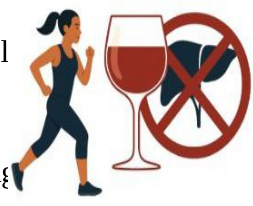
Exercise and Alcohol: Understanding the Facts
Many people believe that regular exercise can (29) ___________ the harmful effects of alcohol. Although physical activity improves fitness and heart health, it does not remove the risks (30) ___________drinking.
Studies show that exercise may support cardiovascular function, (31) ___________ alcohol Hình từ đề gốc he liver and other vital organs. Being active does not "cancel out" excessive drinking.
To protect long-term health:
• Adopt a (32) ___________combining physical activity with responsible drinking.
• Maintain discipline and awareness.
• Review your drinking patterns and exercise habits by tracking the (33) ___________ of units of alcohol you consume each week.
• Take a balanced approach in order to (34) ___________the overall risk of alcohol- related diseases, rather than expecting exercise alone to cancel out the effects of drinking.
Question 29.
Read the following leaflet and mark the letter A, B, C, or D on your answer sheet to indicate the option that best fits each of the numbered blanks from 29 to 34.
Exercise and Alcohol: Understanding the Facts
Many people believe that regular exercise can (29) ___________ the harmful effects of alcohol. Although physical activity improves fitness and heart health, it does not remove the risks (30) ___________drinking.
Studies show that exercise may support cardiovascular function, (31) ___________ alcohol Hình từ đề gốc he liver and other vital organs. Being active does not "cancel out" excessive drinking.
To protect long-term health:
• Adopt a (32) ___________combining physical activity with responsible drinking.
• Maintain discipline and awareness.
• Review your drinking patterns and exercise habits by tracking the (33) ___________ of units of alcohol you consume each week.
• Take a balanced approach in order to (34) ___________the overall risk of alcohol- related diseases, rather than expecting exercise alone to cancel out the effects of drinking.
Question 30.
Read the following leaflet and mark the letter A, B, C, or D on your answer sheet to indicate the option that best fits each of the numbered blanks from 29 to 34.
Exercise and Alcohol: Understanding the Facts
Many people believe that regular exercise can (29) ___________ the harmful effects of alcohol. Although physical activity improves fitness and heart health, it does not remove the risks (30) ___________drinking.
Studies show that exercise may support cardiovascular function, (31) ___________ alcohol Hình từ đề gốc he liver and other vital organs. Being active does not "cancel out" excessive drinking.
To protect long-term health:
• Adopt a (32) ___________combining physical activity with responsible drinking.
• Maintain discipline and awareness.
• Review your drinking patterns and exercise habits by tracking the (33) ___________ of units of alcohol you consume each week.
• Take a balanced approach in order to (34) ___________the overall risk of alcohol- related diseases, rather than expecting exercise alone to cancel out the effects of drinking.
Question 31.
Read the following leaflet and mark the letter A, B, C, or D on your answer sheet to indicate the option that best fits each of the numbered blanks from 29 to 34.
Exercise and Alcohol: Understanding the Facts
Many people believe that regular exercise can (29) ___________ the harmful effects of alcohol. Although physical activity improves fitness and heart health, it does not remove the risks (30) ___________drinking.
Studies show that exercise may support cardiovascular function, (31) ___________ alcohol Hình từ đề gốc he liver and other vital organs. Being active does not "cancel out" excessive drinking.
To protect long-term health:
• Adopt a (32) ___________combining physical activity with responsible drinking.
• Maintain discipline and awareness.
• Review your drinking patterns and exercise habits by tracking the (33) ___________ of units of alcohol you consume each week.
• Take a balanced approach in order to (34) ___________the overall risk of alcohol- related diseases, rather than expecting exercise alone to cancel out the effects of drinking.
Question 32.
Read the following leaflet and mark the letter A, B, C, or D on your answer sheet to indicate the option that best fits each of the numbered blanks from 29 to 34.
Exercise and Alcohol: Understanding the Facts
Many people believe that regular exercise can (29) ___________ the harmful effects of alcohol. Although physical activity improves fitness and heart health, it does not remove the risks (30) ___________drinking.
Studies show that exercise may support cardiovascular function, (31) ___________ alcohol Hình từ đề gốc he liver and other vital organs. Being active does not "cancel out" excessive drinking.
To protect long-term health:
• Adopt a (32) ___________combining physical activity with responsible drinking.
• Maintain discipline and awareness.
• Review your drinking patterns and exercise habits by tracking the (33) ___________ of units of alcohol you consume each week.
• Take a balanced approach in order to (34) ___________the overall risk of alcohol- related diseases, rather than expecting exercise alone to cancel out the effects of drinking.
Question 33.
Read the following leaflet and mark the letter A, B, C, or D on your answer sheet to indicate the option that best fits each of the numbered blanks from 29 to 34.
Exercise and Alcohol: Understanding the Facts
Many people believe that regular exercise can (29) ___________ the harmful effects of alcohol. Although physical activity improves fitness and heart health, it does not remove the risks (30) ___________drinking.
Studies show that exercise may support cardiovascular function, (31) ___________ alcohol Hình từ đề gốc he liver and other vital organs. Being active does not "cancel out" excessive drinking.
To protect long-term health:
• Adopt a (32) ___________combining physical activity with responsible drinking.
• Maintain discipline and awareness.
• Review your drinking patterns and exercise habits by tracking the (33) ___________ of units of alcohol you consume each week.
• Take a balanced approach in order to (34) ___________the overall risk of alcohol- related diseases, rather than expecting exercise alone to cancel out the effects of drinking.
Question 34.
Read the following announcement and mark the letter A, B, C, or D on your answer sheet to indicate the option that best fits each of the numbered blanks from 35 to 40.
Earth Day 2026 – Our Power, Our Planet
Earth Day 2026 will take place on April 22nd under the theme “Our Power, Our Planet.” The campaign brings together individuals and organisations (35) ________are committed to promoting renewable energy and sustainable development. Participants may join one workshop on renewable energy and (36) ___________on waste reduction, depending on their interests.
By taking part in these events, they can make a meaningful (37) ___________to raising public awareness. Long-term sustainability depends on cooperation across different sectors.
The campaign also highlights clean energy solutions (38) by scientists and environmental organisations. By working together, individuals can play a vital role in (39) ________a greener future.
(40) ________________communities actively support these initiatives, they will help accelerate global climate action.
(Adapted from https://www.earthday.org)
Question 35.
Question 36.
By taking part in these events, they can make a meaningful (37) ________ to raising public awareness.
The campaign also highlights clean energy solutions (38) ________ by scientists and environmental organisations.
Question 39. By working together, individuals can play a vital role in ________ a greener future.
Question 40. ________ communities actively support these initiatives, they will help accelerate global climate action.
Sẵn sàng kiểm tra năng lực trọn vẹn với đề Kỳ Thi Thử Tốt Nghiệp THPT Tiếng Anh 2026 - Đề Số 0202?

Thông số cấu trúc đề thi

Tên đề thiKỳ Thi Thử Tốt Nghiệp THPT Tiếng Anh 2026 - Đề Số 0202
Cấu trúc & thời lượng40 câu hỏi • 50 phút • Thang điểm 10
Phân loại & nguồn đềMiền Bắc • Tiếng Anh • Kỳ thi THPT • Đề Sở GD&ĐT • 2026 • wait for review

Lưu ý khi làm bài

Bấm làm bài để chọn một trong hai cách.

Thi thật: đồng hồ đếm ngược 50 phút chạy từ lúc bạn bắt đầu, chấm điểm khi nộp bài.

Luyện tập: không giới hạn giờ, bạn kiểm tra từng câu ngay khi làm, mở đáp án và lời giải khi muốn, và nộp bài bất cứ lúc nào.

Hỗ trợ 3 cách hiển thị linh hoạt: Làm từng câu, Cuộn toàn bộ đề hoặc Kèm phiếu trả lời.

Tự động lưu tiến độ làm bài. Khi nộp bài, bạn xem điểm và lời giải chi tiết của cả đề.

Bảng xếp hạng

Xếp hạng theo điểm số cao nhất và thời gian hoàn thành nhanh nhất

1 lượt xem0 lượt thi

Phổ điểm toàn quốc

Phổ điểm hiện khi đề có từ 10 lượt làm. Hiện đề có 0 lượt.

Chưa có sĩ tử nào ghi danh ở đề thi này

Hãy là người đầu tiên hoàn thành bài thi và lập kỷ lục điểm số trên bảng vàng toàn quốc!

Đề thi cùng khu vực & chuyên đề liên quan

Luyện tập thêm các đề thi thử cùng Sở GD&ĐT, cùng tỉnh/miền hoặc cùng chuyên đề trên Đề Thi Chuẩn (dethichuan.com)

Xem kho đề →
Thi thử tốt nghiệp THPT50 câu • 60p

Đề Thi Thử Tốt Nghiệp THPT Tiếng Anh 2022 - Đề Số 1

Miền Bắc · Đề Sở GD&ĐT · Kỳ thi THPT
1 lượt xemLàm đề
Thi thử tốt nghiệp THPT40 câu • 50p

Kỳ Thi Thử Tốt Nghiệp THPT Tiếng Anh 2025-2026 Sở GD&ĐT Sơn La - Lần Thứ Hai (Mã Đề 1121)

Miền Bắc · Sơn La · Đề Sở GD&ĐT
8 lượt xemLàm đề
Khác / Chưa phân loại40 câu • 50p

Kỳ Thi Tốt Nghiệp THPT Tiếng Anh 2025 Sở GD&ĐT Tuyên Quang

Miền Bắc · Tuyên Quang · Đề Sở GD&ĐT
9 lượt xemLàm đề
Khác / Chưa phân loại40 câu • 50p

Kỳ Thi Tốt Nghiệp THPT Tiếng Anh 2025 Sở GD&ĐT Phú Thọ

Miền Bắc · Phú Thọ · Đề Sở GD&ĐT
1 lượt xemLàm đề
Thi thử tốt nghiệp THPT50 câu • 60p

Kỳ Thi Thử Tốt Nghiệp THPT Tiếng Anh 2024 - Lần 2

Miền Bắc · Nghệ An · Đề Sở GD&ĐT
3 lượt xemLàm đề
Khảo sát chất lượng50 câu • 60p

Kỳ Thi KSCL Tốt Nghiệp THPT Tiếng Anh 2021-2022 - Lần 1

Miền Bắc · Đề Sở GD&ĐT · Kỳ Thi
2 lượt xemLàm đề
Thi thử tốt nghiệp THPT50 câu • 60p

Đề Thi Thử THPT Quốc Gia Lần 1 Tiếng Anh 12 THPT Nguyễn Viết Xuân Sở GD&ĐT Vĩnh Phúc 2019-2020 (Mã Đề 104)

Miền Bắc · Vĩnh Phúc · Đề Sở GD&ĐT
0 lượt xemLàm đề
Thi thử tốt nghiệp THPT50 câu • 50p

Đề Thi Thử Tốt Nghiệp THPT Tiếng Anh 2021 - Đề Số 05

Miền Bắc · Đề Sở GD&ĐT
2 lượt xemLàm đề